
Water where a fireplace should be dry
Carson does not get much rain, but when the winter storms arrive they come hard and sideways, and factory-built chases are good at letting water in. The leak usually shows somewhere awkward: a stain on the ceiling beside the fireplace, a damp patch on the wall of the room above, rust on the firebox floor, a damper blade rusted fast after the first storm. Owners call about the stain. The job is finding where the water starts.
Where chase leaks start
On a factory-built system, water has several ways in, and from indoors they all look the same.
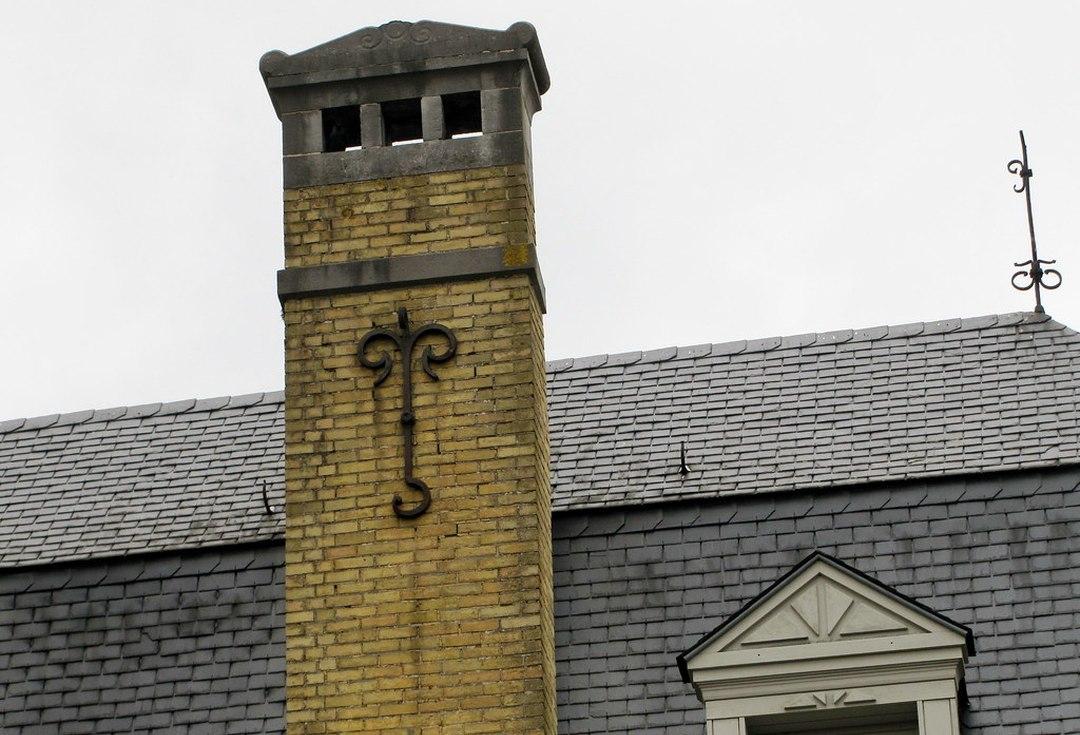
- The chase top. A rusted or dished pan holds water and lets it through at seams and pinholes.
- The storm collar. The metal ring that seals the pipe where it passes through the top. Its sealant dries out, and water runs down the outside of the pipe.
- The cap. A cracked or missing cap lets rain straight down the pipe.
- Chase siding. Cracked stucco, open siding joints or gaps around trim let wind-driven rain into the framing.
- Roof flashing. Where the chase meets the roof, step and counter flashing, and on a slope a cricket on the uphill side, keep water out. Old flashing lifts and splits.
Often there is more than one. A quote that fixes only the obvious one leaves the stain coming back next season.
The price range: $525 to $3,150
Finding the leak and fixing it runs $525 to $3,150 on our list. The low end is a single source with no damage behind it: a storm collar reset, a split seam closed, a short run of flashing. The top end is a chase that has been wet for a while: the source fixed, plus sheathing, framing or insulation inside the chase replaced.
Other parts carry their own line:
- Cricket with the chase flashing renewed in the same job: $630 to $1,600.
- Cricket alone on the uphill face: $420 to $945.
- New pipe cap, fitted: quoted after we measure.
- Camera look up the pipe with a written report, when the pipe itself is in question: $370.
A new chase top, new siding or stucco, and anything inside the ceiling are quoted in writing after we have opened up what needs opening.
What decides your figure
Four things set the final number.
- How many sources. One or several.
- How long it has leaked. The longer, the more wood has soaked.
- The roof. Tile or shingle, the pitch, and whether the chase sits on the slope or at a ridge.
- Access. One storey or two, and whether we can reach the inside of the chase from the attic.
Describe the leak in the form: where the stain is, when it shows up, and whether wind makes it worse. That tells us what to look at first. We may ask for a photo when we call back.
How we trace it
We do not guess from the street. The visit starts inside at the stain, then the firebox, then the attic if the chase can be reached from there. On the roof we look at the cap, the collar, the top, the siding and the flashing. Where the source is still not clear, we may run water over one part at a time while someone watches inside. Each source we find goes on the quote as its own line, with a photo.
Repairs that hold
The fixes follow the system. A storm collar is the maker's or a listed one. A chase top is bent to size, with a raised collar and enough pitch to shed rain. Flashing is stepped and countered into the siding, not just smeared with sealant. Sealant has its place, but it is not a repair on its own; a quote that is mostly caulk will see you again next winter.
When the damage is inside
If water has run for a few seasons, the ceiling or the wall by the fireplace may need opening. We say what we can see and what we cannot, and we price the chase work and the inside work as separate lines. Drywall and paint inside the room are listed so you know what is left for a painter or a general contractor.
Gas units leak too
A factory-built gas fireplace or a direct-vent unit has its own termination on the roof or the wall, and the same chase problems apply: a rusted top, a tired collar, flashing that has lifted. Water reaching a gas valve or the burner tray is a reason to stop using the unit until it has been looked at. We trace these leaks the same way and list the gas parts we saw on the report.
If the house is changing hands
A leak stain is just the kind of thing a buyer's inspector writes up. If you are selling in Carson, having the source found and priced before the report comes in helps both sides. See our post on prefab fireplaces in a home sale, and the chase top and cap prices post for the top itself.
Book a leak visit in Carson
We trace chase leaks in Carson, Gardena, Long Beach and Bellflower. The leak repair page and the chase cover page have more on each part. When the next storm leaves a mark, use the contact page and tell us where it showed up.
Rather Hand the Fireplace to Us?
Hamlin Chimney Services reads the data plate, checks panels, damper, pipe and chase cover against that model, and prices any part in writing. Book from Carson, Gardena, Long Beach or Bellflower.